Mon – Sat · 10:00 am – 7:00 pm

High Speed Steel

Tungsten, molybdenum and cobalt high speed steels – M2, M3:2, M35, M42, T1, T4, T15, T42 and powder-metallurgy grades – stocked in Mumbai as annealed round bar, flats, squares and plates for cutting tools, punches and cold-work tooling.

10+ HSS Grades Red Hardness to 600 °C EN 10204 3.1 MTC
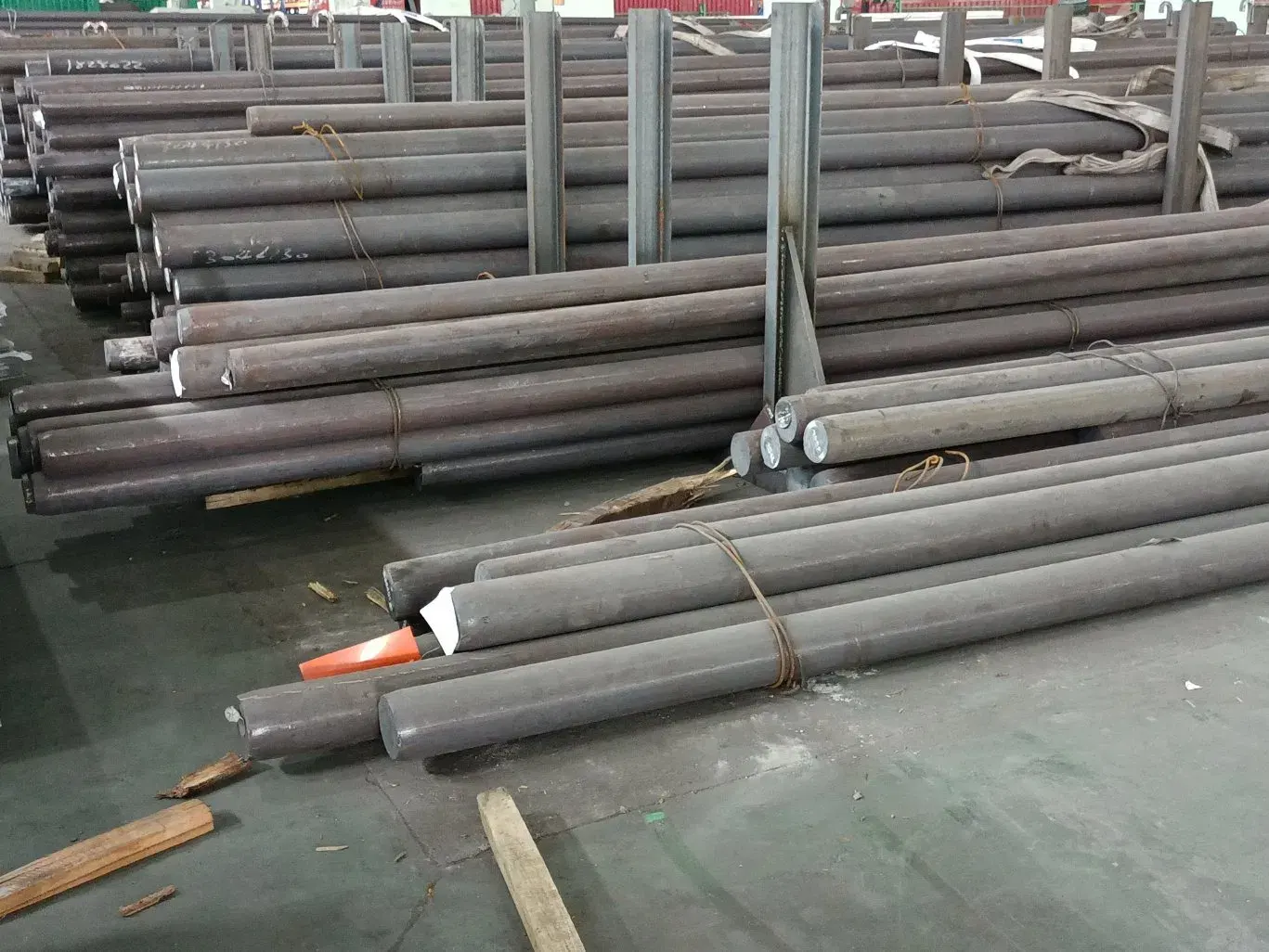
High speed steel round bars and flats in stock
GradesM2 · M35 · M42 · T1 · T42 · ASP FormsRound · Flat · Square · Plate SupplyAnnealed ≤ 269 HB · Cut to size
Overview

Steels That Stay Hard When Red Hot

High speed steel (HSS) is a high-alloy tool steel that keeps its hardness at the temperatures generated by fast machining – around 600 °C – where carbon tool steels soften. That property, called red hardness or hot hardness, comes from a tempered martensitic matrix packed with hard tungsten, molybdenum and vanadium carbides.

Almost every drill, tap, reamer, broach, hob and milling cutter in a machine shop is made from HSS, and it is increasingly used for chipless forming – blanking, punching, cold extrusion and thread rolling. Honesty Impex stocks the popular grades in Mumbai in the annealed condition, cut to length and supplied with mill test certificates and hardness reports.

  • Molybdenum (M), tungsten (T) & cobalt grades
  • Round bar, flats, squares & plates ex-stock
  • Annealed, straightened, cut to size
  • Spectro analysis & hardness certified

Quick Facts

Grades
M2, M3:2, M4, M7, M35, M42, T1, T4, T15, T42, ASP 2023 / 2030 / 2060
Forms
Round Ø 2 – 250 mm, flats, squares, plates & blocks, tool bits
Supply condition
Soft annealed, typically ≤ 269 HB (max 300 HB for Co grades)
Working hardness
63 – 67 HRC after hardening & triple tempering
Standards
ASTM A600, EN ISO 4957, DIN 17350, IS 7291, JIS G4403, BS 4659
Certification
EN 10204 3.1 with chemistry, hardness & decarb; TPI on request

What Each Alloying Element Does

By adjusting these elements the steelmaker tunes an HSS grade for toughness, wear resistance or hot hardness – which is why there is a grade for virtually every cutting and forming job.

ElementTypical %Effect in high speed steel
Carbon (C)0.75 – 1.5Forms the carbides and sets the base hardness of the martensitic matrix; more carbon = more wear resistance, less toughness
Tungsten (W)1.5 – 18Forms very hard M₆C carbides; gives red hardness and high-temperature strength (the "T" grades)
Molybdenum (Mo)0 – 10Same role as tungsten at roughly half the weight; "M" grades are tougher and more economical, now the industry standard
Vanadium (V)1 – 5Forms MC carbides of extreme hardness (~2800 HV) for abrasion resistance; high-V grades (T15, M4) are best for abrasive work
Chromium (Cr)~4Gives through-hardening (hardenability) and forms readily soluble carbides; also helps oxidation resistance during heat treatment
Cobalt (Co)5 – 10Dissolves in the matrix (no carbides) and raises red hardness and tempering resistance; cobalt grades (M35, M42, T4, T15, T42) for hard materials and high speeds
Grades & Composition

High Speed Steel Grades We Stock

Nominal compositions in weight %. The older Indian trade names "IM" and "IT" correspond to the AISI M and T series (IM2 = M2, IT1 = T1).

Grade (AISI)Equivalents – W.Nr / EN · BS · IS · JISCCrMoVWCoCharacter & Typical Tools
M21.3343 HS6-5-2 · BM2 · XT87W6Mo5Cr4V2 · SKH510.904.15.01.96.4–The general-purpose HSS; best balance of toughness and wear. Twist drills, taps, reamers, milling cutters, broaches, saws, punches, cold-work tools
M3 class 21.3344 HS6-5-3 · BM4 · SKH531.204.25.03.06.2–Higher carbon & vanadium than M2 for abrasion resistance. Broaches, form tools, milling cutters, thread-rolling dies, fine blanking
M41.3351 HS6-5-4 · BM4 · SKH541.304.34.54.05.8–High vanadium – excellent wear resistance for abrasive materials, castings and heat-treated steels. Broaches, chasers, milling cutters, punches
M71.3348 HS2-9-2 · SKH581.003.88.72.01.8–Molybdenum-rich, tough and economical. Heavy-duty twist drills, taps, reamers, routers
M351.3243 HS6-5-2-5 · BM35 · XT90W6Co5Mo5Cr4V2 · SKH550.934.15.01.96.44.8M2 plus 5% cobalt for higher hot hardness. Drills, taps, end mills and gear hobs on stainless, titanium and heat-resistant alloys
M421.3247 HS2-9-1-8 · BM42 · XT110Mo10Co8Cr4W2 · SKH591.083.99.51.21.58.0Hardens to 67 – 69 HRC; superior hot hardness for difficult materials. Cobalt drills, end mills, milling cutters, form tools, cold-work punches
T11.3355 HS18-0-1 · BT1 · XT72W18Cr4V1 · SKH20.754.1–1.118.0–The classic 18-4-1 tungsten HSS; stable in heat treatment, good grindability. Lathe & planer tools, tool bits, threading dies, broaches, reamers
T41.3255 HS18-1-2-5 · BT4 · XT75W18Co5Cr4MoV1 · SKH30.754.20.61.118.05.0T1 with 5% cobalt for heavy roughing cuts and hot hardness. Turning, planing and milling tools for roughing work
T151.3202 HS12-1-5-5 · BT15 · SKH101.554.3–5.012.55.0Maximum abrasion resistance (high V + Co); the hardest conventional HSS. Finishing & precision-cutting tools, form tools, cold-heading dies
T421.3207 HS10-4-3-10 · BT42 · SKH571.254.03.63.29.310.0Highest cobalt super-HSS, 66 – 68 HRC. Roughing and finishing tools for hard materials, woodworking knives, highly stressed cold-work tools, tool bits
ASP 2023 (PM)≈ HS6-5-3 PM · 1.33951.284.25.03.16.4–Powder-metallurgy M3:2: uniform fine carbides, better toughness and grindability. Gear cutting tools, broaches, punches, cold-forming tools
ASP 2030 (PM)≈ HS6-5-3-8 PM · 1.32941.284.25.03.16.48.5PM cobalt grade combining hot hardness with toughness. Hobs, shaper cutters, end mills, taps for high-strength steels
ASP 2060 (PM)PM super-HSS2.304.27.06.56.510.5Extreme wear & hot hardness (up to 69 HRC) only possible by PM. Tools for very hard or abrasive materials, fine-blanking punches
Heat Treatment

From Annealed Bar to 67 HRC

Material is supplied soft for machining. Hardness is developed by the tool maker in a controlled hardening and tempering cycle – typical parameters below.

Supply Condition

Annealing
Soft annealed 820 – 880 °C, slow cooled
Hardness
Typically 230 – 269 HB (M2, T1); up to 300 HB for cobalt grades
Surface
Black (hot rolled), peeled, bright drawn or ground; decarburisation within standard limits
Stress relief
600 – 700 °C after rough machining, before hardening

Hardening

Pre-heating
Two steps: 450 – 500 °C and 850 – 900 °C
Austenitising
M2: 1190 – 1230 °C · M35 / M42: 1170 – 1210 °C · T1: 1260 – 1290 °C · T42: 1220 – 1250 °C
Quench
Salt bath 500 – 550 °C, oil, pressurised gas (vacuum) or air for small sections
Result
63 – 65 HRC as-quenched with retained austenite

Tempering

Cycle
At least twice (three times for Co grades), 1 – 2 h each, cooling to room temperature between
Temperature
540 – 570 °C (secondary hardening peak)
Working hardness
M2 63 – 65 · M35 64 – 66 · M42 66 – 68 · T15 / T42 66 – 68 HRC
Red hardness
Retains ≈ 55 – 60 HRC at 550 – 600 °C

Figures are typical values from grade data sheets; follow your heat-treater’s procedure for the actual section size.

Forms & Sizes

HSS Forms Available Ex-Stock

High speed steel is supplied as bar and flat product. Pipes, fittings and flanges are not made in HSS – see our other materials for those.

ROUND BAR

Round Bar

Hot rolled, peeled and centreless-ground HSS rounds for drills, reamers, taps, punches and tool bits.

  • Sizes Ø 2 – 250 mm; small sizes bright drawn / ground h9 – h11, larger sizes peeled or black
  • Lengths 1 – 4 m random; cut pieces and blanks to length
  • Grades M2, M35, M42, T1, T42, M3:2, ASP 2023
FLAT & SQUARE

Flats & Squares

Rolled and forged flats and squares for knives, blades, broaches, form tools, punches and dies.

  • Flats 3 × 20 mm up to 100 × 400 mm; precision ground flats on request
  • Squares 6 – 150 mm; tool bits 4 – 25 mm square in standard lengths
  • Grades M2, M35, M42, T1, T42, T15
PLATE & BLOCK

Plates & Blocks

Rolled plate and forged blocks for circular saw blanks, slitting cutters, cold-work dies and large form tools.

  • Plates 3 – 100 mm thick; cut to required size, ground on request
  • Blocks Forged and annealed, machined all faces to order
  • Grades M2, M35, ASP 2023 / 2030

HSS density is about 8.1 – 8.7 g/cm³ (higher for tungsten and cobalt grades) – use the weight calculator with the correct density when estimating tonnage. Bars are supplied with a surface allowance for machining.

Standards

Specifications We Supply To

High speed steel is ordered by grade designation under one of these product standards.

ASTM A600Standard specification for tool steel high speed – M and T series
EN ISO 4957Tool steels – HS designations (e.g. HS6-5-2, HS6-5-2-5, HS18-0-1)
DIN 17350Legacy German tool-steel standard; W.Nr 1.33xx series still widely quoted
IS 7291Indian standard for high speed tool steels – XT designations
JIS G4403Japanese high speed tool steels – SKH series
BS 4659British tool-steel grades BM2, BM35, BM42, BT1, BT42 (withdrawn, still referenced)
ASTM A681Companion specification for cold-work & hot-work tool steels
EN 10204Inspection documents – 3.1 mill certificate, 3.2 with third-party inspection

See the full standards directory

Applications

Where High Speed Steel Is Used

Cutting and forming tools across engineering, tooling and manufacturing – and the grades normally chosen for them.

Drills, Taps & Reamers

M2 · M7 · M35 · M42

Milling Cutters & Hobs

M2 · M35 · ASP 2030 · T15

Broaches & Form Tools

M3:2 · M4 · ASP 2023 · T15

Saw Blades & Knives

M2 · M35 · T1 · T42

Punches & Blanking Dies

M2 · M42 · ASP 2023 · ASP 2060

Thread-Rolling & Cold Heading

M3:2 · T15 · ASP 2030

Woodworking Tools

M2 · T1 · T42

Tool Bits & Lathe Tools

T1 · T4 · T42 · M2

FAQ

High Speed Steel – Common Questions

What to include in an enquiry, and the questions tool makers ask us most often.

  1. 1
    Gradee.g. M2 / HS6-5-2 / 1.3343 or M35, M42, T1, T42
  2. 2
    Form & sizeRound Ø, flat W × T, square, plate T × W × L
  3. 3
    SurfaceBlack, peeled, bright drawn, ground (tolerance class)
  4. 4
    Lengths & quantityRandom lengths, cut pieces, kg or pieces
  5. 5
    CertificationEN 10204 3.1 (chemistry, annealed hardness, decarb) or 3.2
  6. 6
    DeliveryDestination and required date

Frequently Asked Questions

M2 or M35 / M42 – when is cobalt worth the extra cost?

M2 covers most general machining of mild, carbon and alloy steels. Choose a cobalt grade when cutting speeds are high or the workpiece is stainless steel, titanium, heat-resistant alloys or hardened steel: cobalt raises hot hardness so the edge survives longer. M42 is the usual step-up for drills and end mills; M35 for taps and hobs where toughness still matters.

What is the difference between "M" and "T" grades?

"T" grades (T1, T4, T15, T42) use tungsten as the main carbide former; "M" grades (M2, M35, M42) use molybdenum, which does the same job at about half the weight, making the steel tougher and less expensive. M grades dominate modern production, while T1 is still preferred for tool bits and where very stable heat treatment is needed.

Is the material supplied hardened?

No – HSS is supplied soft annealed (around 230 – 300 HB) so that it can be machined. Hardening and tempering to 63 – 68 HRC is carried out by the tool maker after rough machining. We supply the annealed hardness and decarburisation values on the certificate.

What are PM (ASP) grades and when should I use them?

Powder-metallurgy HSS is made by gas-atomising the melt and hot-isostatically pressing the powder, which gives very fine, evenly distributed carbides with no segregation. The result is better toughness, grindability and dimensional stability at the same or higher hardness. Use PM grades for gear-cutting tools, large broaches, fine-blanking punches and any tool where chipping of conventional HSS is a problem.

Do you cut bars to size and supply small quantities?

Yes. Rounds, flats and squares are cut to the lengths you need from Mumbai stock, from single bars to tonnage lots, each tagged with grade and heat number.

Get in Touch

Need a Material in a Specific Grade or Size?

Send us the product, grade, size, quantity and delivery location – our team replies with stock status and a competitive quote, usually the same working day.